Showing posts with label DISCOVERY. Show all posts
Showing posts with label DISCOVERY. Show all posts
Saturday, 9 May 2015
Have You Heard? MTN Beta Talk – Enjoy 200% Bonus
MTN Beta Talk is a prepaid tariff plans that rewards customers with 200% bonus airtime on every recharge of N100 and above. In other words, you will get 3 times the value of your recharge on this package. When you make calls, National calls will be charged at the same flat rate of N24/minute (40k/sec) from the customer’s bonus and main accounts.
All National calls, SMS and Data will be charged from the customer’s main account as soon as the bonus airtime is exhausted or expires.
All MTN Prepaid customerscan migrate to MTN Beta Talk tariff plan. This package is new and awooful… It will be beneficial to those who make alots of calls.
Why You Should Migrate to MTN Beta Talk Package
==>You will be rewarded with 200% bonus airtime on every recharge of N100 and above.
==>The bonus airtime will only be valid for 7 days.

Thursday, 2 April 2015
Iran nuclear talks: Obama hails 'historic' agreement as Iranians celebrate
On Thursday, news of the framework announcement broke as Iranians celebrated the final night of the new year holidays, Nowruz
Iranians celebrate the new year in March, to coincide with the spring vernal equinox. This year, Nowruz began on March 21, marking the beginning of the year 1393 in the Persian calendar. Nowruz is a secular festival that is also celebrated in neighboring countries, like Afghanistan, Tajikistan and Uzbekistan.
The Guardian’s Tehran Bureau wrote recently of Nowruz:
The time and date of Nowruz varies every year but the same traditions are always observed – beginning with fire jumping on the last Tuesday of the old year and ending with a national picnic on the 13th day of the new year. The festival centres around the Haft Sin arrangement, where seven items, all beginning with the sound of ‘S’ in Persian, are placed on a table or the floor to symbolise health, prosperity and renewed life.
Obama phoned Binyamin Netanyahu on Thursday to discuss the latest breakthrough in nuclear negotiations, according to a statement provided by the White House, reports Sabrina Siddiqui:
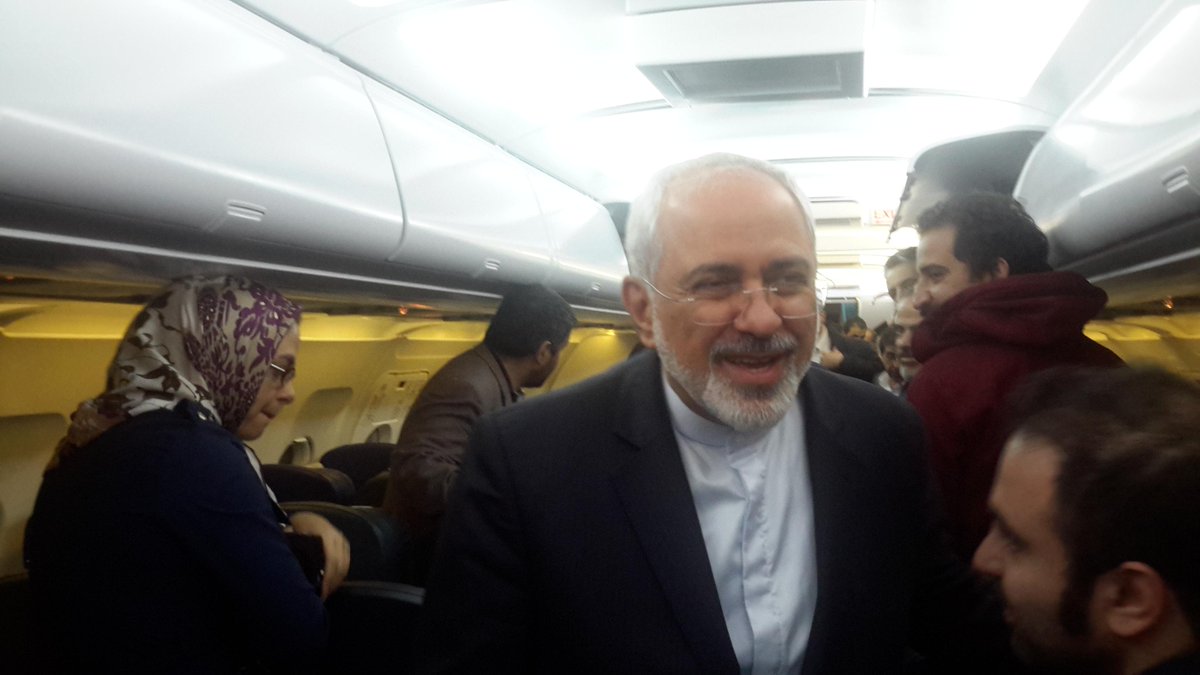
Here’s a round-up of some of the night’s vines, tweets and instagrams from the streets of Tehra.
Reuters is reporting that President Obama called Saudi Arabia’s King Salman bin Abdulaziz al-Saud on Thursday to discuss the deal international negotiators reached with Iran on its nuclear program.
Obama invited Salman and the Gulf Cooperation Council to Camp David for a summit to continue conversations on Iran, the White House said.
Saudi Arabi, Iran’s main regional rival, has long made clear its unhappiness with the emerging deal, the Guardian’s Middle East editor Ian Black wrote on Monday:
Still, unlike Israel, which flatly opposes any agreement, Saudi Arabia has adopted a more subtle approach. [...]
The Saudis have hinted for years that they would turn to Pakistan if they felt threatened by a nuclear Iran. Last year they displayed their Chinese-made intermediate-range ballistic missiles — capable of reaching Tehran — at a parade attended by the general who controls Pakistan’s nuclear arsenal. It was, said the Brookings Institution analyst Bruce Riedel, “ a very calculated signal”.
But the Saudis have wider concerns: an American-Iranian rapprochement, they fear, will undermine their own influence and security. Prince Turki al-Faisal, the former Saudi intelligence chief, warned in London earlier this month that the romance was now “nearing consummation”.
For more than 10 years, diplomatic attempts have been made to address Iran’s nuclear policy. Here’s a useful timeline of the nuclear talks so far, going back to August 2002.

Women sitting in a car flash the “V for Victory” sign as they celebrate on Valiasr street. Photograph: Atta Kenare
The arms-proliferation experts at the Carnegie Endowment for International Peace are giving Thursday’s nuclear deal with Iran a passing grade, reports the Guardian’s Spencer Ackerman: They have pronounced themselves pleasantly surprised by the strength of the deal’s restrictions and verification measures and sanguine about some of its areas of technical vagueness.
George Perkovich, Carnegie’s vice-president, said the deal’s provisions to monitor the entire Iranian nuclear supply chain will give the US and its allies enhanced visibility to prevent a so-called “sneak-out” – a surreptitious Iranian path to a bomb. “It’s a very positive development and represents significant progress,” Perkovich said on a conference call with reporters.
Carnegie analyst James Acton, a physicist, said the framework deal’s lack of specificity on what happens to Iran’s stockpile of 9,700 kg of low-enriched uranium was not a significant proliferation risk. Either Iran will have to “down-blend” it to natural uranium or, as has been suggested in the past, it will ship it out to Russia. “My guess is they haven’t decided,” Acton said. (Under the framework, Iran will retain 300 kg of low-enriched uranium.)
Iranians celebrate the new year in March, to coincide with the spring vernal equinox. This year, Nowruz began on March 21, marking the beginning of the year 1393 in the Persian calendar. Nowruz is a secular festival that is also celebrated in neighboring countries, like Afghanistan, Tajikistan and Uzbekistan.
The Guardian’s Tehran Bureau wrote recently of Nowruz:
The time and date of Nowruz varies every year but the same traditions are always observed – beginning with fire jumping on the last Tuesday of the old year and ending with a national picnic on the 13th day of the new year. The festival centres around the Haft Sin arrangement, where seven items, all beginning with the sound of ‘S’ in Persian, are placed on a table or the floor to symbolise health, prosperity and renewed life.
Obama phoned Binyamin Netanyahu on Thursday to discuss the latest breakthrough in nuclear negotiations, according to a statement provided by the White House, reports Sabrina Siddiqui:
Many Iranians bypassed the state’s strict internet filter system, to post celebratory pictures on social media sites.The President emphasized that, while nothing is agreed until everything is, the framework represents significant progress towards a lasting, comprehensive solution that cuts off all of Iran’s pathways to a bomb and verifiably ensures the peaceful nature of Iran’s nuclear program going forward. He underscored that progress on the nuclear issue in no way diminishes our concerns with respect to Iran’s sponsorship of terrorism and threats towards Israel and emphasized that the United States remains steadfast in our commitment to the security of Israel. The President told the Prime Minister that he has directed his national security team to increase consultations with the new Israeli government about how we can further strengthen our long-term security cooperation with Israel and remain vigilant in countering Iran’s threats.”
Earlier in the day, Obama acknowledged in public remarks that he and the Israeli prime minister disagree on the US efforts to secure a nuclear deal with Iran. Tension between the two world leaders has escalated in recent weeks amid the negotiations, but Obama reiterated his commitment to Israel when addressing the tentative framework.
Here’s a round-up of some of the night’s vines, tweets and instagrams from the streets of Tehra.
Reuters is reporting that President Obama called Saudi Arabia’s King Salman bin Abdulaziz al-Saud on Thursday to discuss the deal international negotiators reached with Iran on its nuclear program.
Obama invited Salman and the Gulf Cooperation Council to Camp David for a summit to continue conversations on Iran, the White House said.
Saudi Arabi, Iran’s main regional rival, has long made clear its unhappiness with the emerging deal, the Guardian’s Middle East editor Ian Black wrote on Monday:
Still, unlike Israel, which flatly opposes any agreement, Saudi Arabia has adopted a more subtle approach. [...]
The Saudis have hinted for years that they would turn to Pakistan if they felt threatened by a nuclear Iran. Last year they displayed their Chinese-made intermediate-range ballistic missiles — capable of reaching Tehran — at a parade attended by the general who controls Pakistan’s nuclear arsenal. It was, said the Brookings Institution analyst Bruce Riedel, “ a very calculated signal”.
But the Saudis have wider concerns: an American-Iranian rapprochement, they fear, will undermine their own influence and security. Prince Turki al-Faisal, the former Saudi intelligence chief, warned in London earlier this month that the romance was now “nearing consummation”.
For more than 10 years, diplomatic attempts have been made to address Iran’s nuclear policy. Here’s a useful timeline of the nuclear talks so far, going back to August 2002.
Women sitting in a car flash the “V for Victory” sign as they celebrate on Valiasr street. Photograph: Atta Kenare
The arms-proliferation experts at the Carnegie Endowment for International Peace are giving Thursday’s nuclear deal with Iran a passing grade, reports the Guardian’s Spencer Ackerman: They have pronounced themselves pleasantly surprised by the strength of the deal’s restrictions and verification measures and sanguine about some of its areas of technical vagueness.
George Perkovich, Carnegie’s vice-president, said the deal’s provisions to monitor the entire Iranian nuclear supply chain will give the US and its allies enhanced visibility to prevent a so-called “sneak-out” – a surreptitious Iranian path to a bomb. “It’s a very positive development and represents significant progress,” Perkovich said on a conference call with reporters.
Carnegie analyst James Acton, a physicist, said the framework deal’s lack of specificity on what happens to Iran’s stockpile of 9,700 kg of low-enriched uranium was not a significant proliferation risk. Either Iran will have to “down-blend” it to natural uranium or, as has been suggested in the past, it will ship it out to Russia. “My guess is they haven’t decided,” Acton said. (Under the framework, Iran will retain 300 kg of low-enriched uranium.)
Thursday, 20 November 2014
Pan African Prize for Innovation: Etisalat supports two innovative Nigerian youths with $35,000 on November 19, 2014 / in Technology 1:56 am / Comments
 |
NYSC: How automated registration makes orientation stress-free on November 19, 2014 / in Technology 12:55 am / Comments

By Adekunle Adekoya, General Editor
Nigeria definitely is moving, even if it seems that there is no movement. It is believed it seems there is no movement simply because substantial and critical operators and institutions in the country are yet to properly key-in to the use of ICT as an enabler in whatever their business is.
Several institutions of higher learning in the
Subscribe to:
Posts
(
Atom
)